Directed by Ronit Izraeli
INTERACTION LAB VISUAL COMMUNICATION UNIVERSITY OF HAIFA SCHOOL OF DESIGN
01_SHAKED
INTERACTION LAB VISUAL COMMUNICATION UNIVERSITY OF HAIFA SCHOOL OF DESIGN

EXP.000
Sensory Research: Sense of Direction
This project was developed as part of a sensory research lab focusing on the sense of direction.
Rather than navigation, the project explores spatial awareness and orientation through visual and physical experimentation.
EXP.001
Zoom In&Out Personal Interpretation
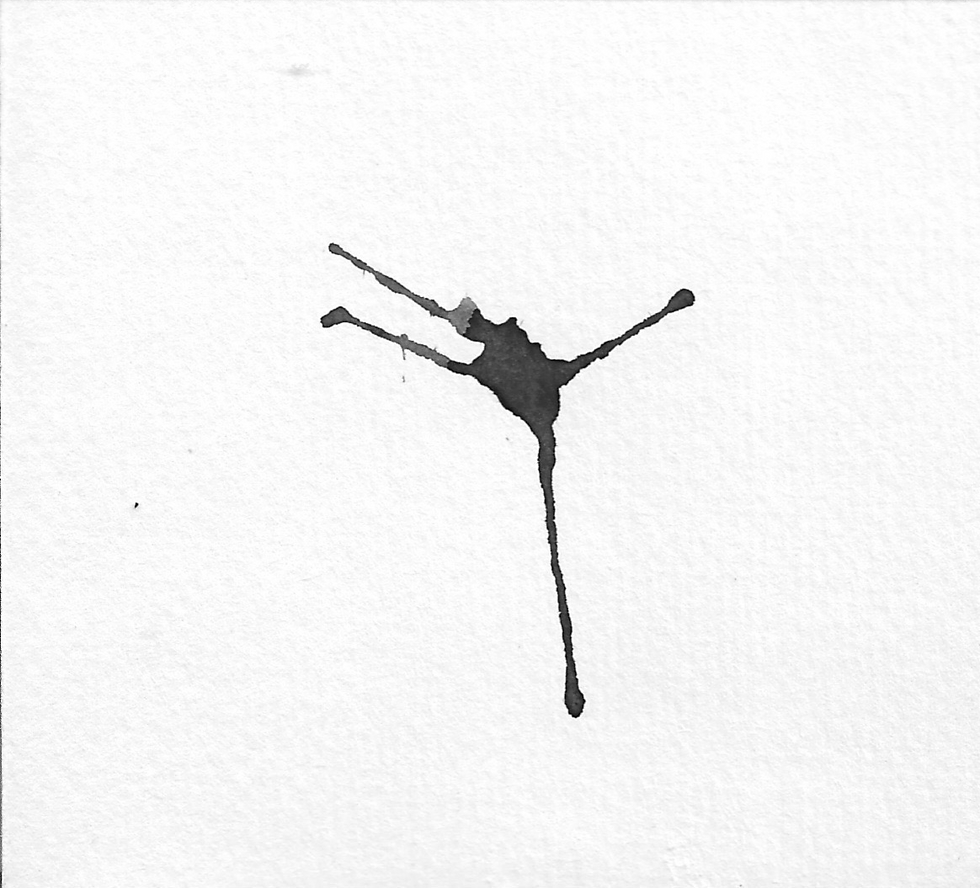
Water and ink were dripped onto paper and shaped by blowing, creating gradual directional dispersion.
By controlling breath intensity, I produced a manual sequence of zoom in and zoom out as an abstract visualization of the sense of direction.




EXP.002
Poster as Spatial Attraction
A poster was designed to encourage the viewer to physically approach the image.
Digital manipulations—including rotation, centering, and duplication—were applied to the original forms to generate multiple visual variations.
EXP.003
Interface Iterations
Early versions of the interface were developed and tested through user research.
Based on these insights, elements were refined, removed, or simplified to create an intuitive and playful interaction.


EXP.004
Final Interface
The final interface allows users to compose sound sequences using water-based sounds with varying intensities, speeds, and materials.
Each interaction generates a unique MP3 sequence and a corresponding control signal for a custom water-drop machine, translating digital choices back into physical dripping.
EXP.005
Presentation & User Interaction
During the presentation, users first experimented with the original manual dripping technique.
They then interacted with the interface and observed their sequences materialize through the water-drop machine.


EXP.006
Water Drop Sequencer Machine
The machine is built on an electronic system controlled by code from the interface.
Each selected symbol triggers a unique number and rhythm of water drops, generating a personalized sequence for every user.
Water drops fall onto a rolled fabric surface, which users can manually rotate.
This physical control mirrors the original dripping technique, allowing users to shape distribution and direction on the material.


Over time, a shared visual sequence emerges from the combined interactions of all users.
The long fabric becomes the final physical outcome of the collective user experience.

Thank you

